
Annexes and Planning Approval in the Green Belt
A Successful Feasibility Study
Table of Contents
Development in the Green Belt and Areas of Outstanding Natural Beauty (AONB)
Many homeowners assume planning permission is a non-starter. In reality, with the right strategy, policy knowledge, and design approach, well-considered proposals can and do succeed.
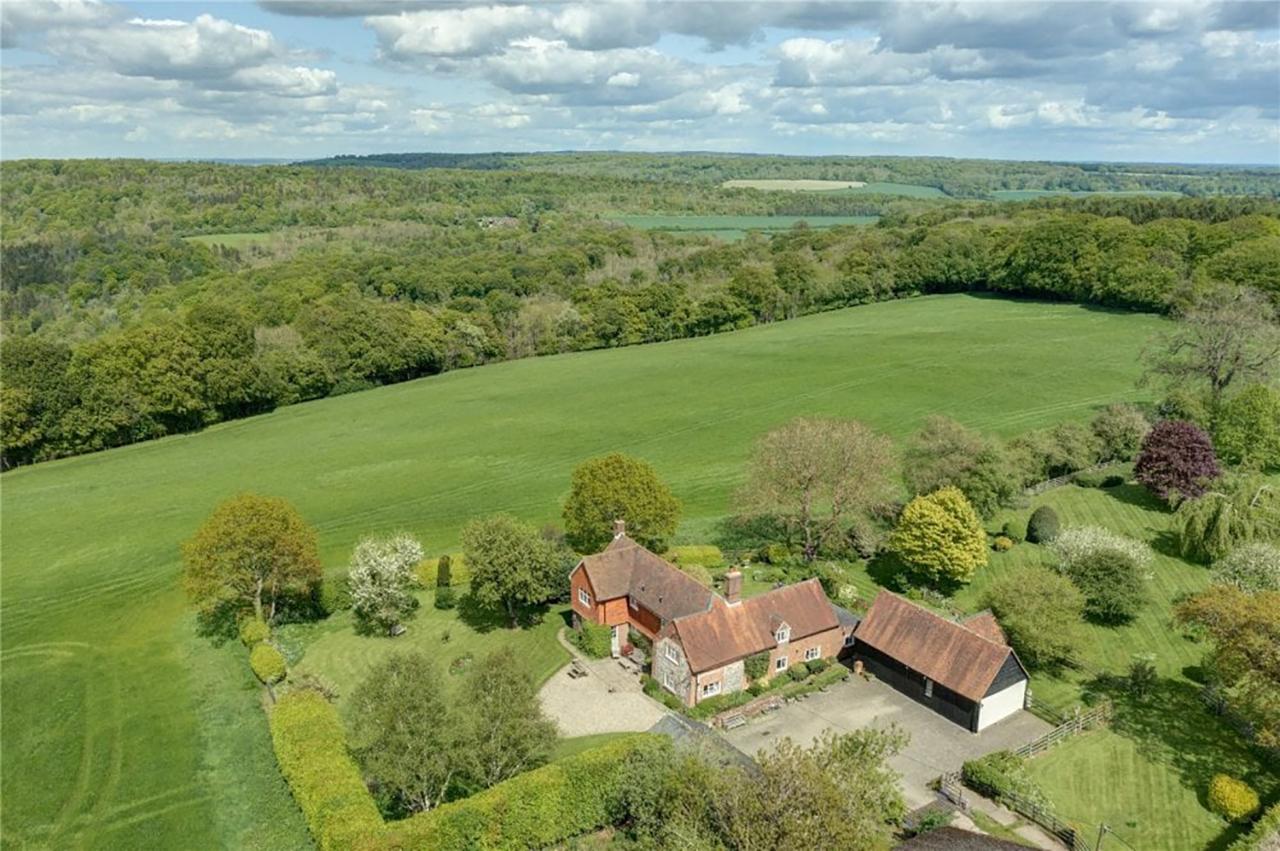
A recent feasibility study we prepared for Green Hailey Farmhouse near Princes Risborough is a perfect example. The project was successfully passed for planning, demonstrating how outbuildings and ancillary accommodation can be delivered even in highly sensitive planning locations.
The Site and Its Constraints
Green Hailey Farmhouse sits within both the Green Belt and the Chilterns Area of Outstanding Natural Beauty, approximately 500 metres south-east of Princes Risborough. The property lies within a generous curtilage of around 1.59 acres, containing:
The main farmhouse
A historic barn
Former stables
All buildings are of permanent construction and well suited to long-term use. Importantly, the site is further protected by surrounding woodland and woodland grant schemes, adding an extra layer of planning sensitivity beyond national and local policy.
This is exactly the sort of site where development must be handled carefully — but also where opportunities exist if proposals respect openness, scale, and character.
Understanding the Planning Landscape
Development within the Green Belt is tightly controlled under national and local planning policy. However, not all development is automatically “inappropriate”.
Key principles that guided this project included:
National Planning Policy Framework (NPPF) allowances for:
Re-use of existing buildings
Limited extensions and alterations
Agricultural and ancillary development
Wycombe District Council policies, particularly:
Policy DM43 (extensions, replacements and outbuildings)
Policy DM45 (conversion of existing buildings)
Permitted Development Rights, where applicable
Design guidance from the Chiltern Buildings Design Guide
The overarching test is whether a proposal preserves the openness of the Green Belt and avoids disproportionate additions or visual harm.
The Proposal: Converting an Existing Outbuilding
The focus of this feasibility study was a modest single-storey timber-framed barn, measuring approximately 73m². Rather than extending or replacing the building, the proposal centred on conversion only, keeping the existing footprint entirely intact.
The intention was to create a self-contained annex to support family living, rather than a separate dwelling. Key elements included:
No extensions or increase in volume
Minimal external alterations
Retention of the barn’s simple rural character
Careful placement of new openings for light and ventilation
Shared access and parking arrangements
Internally, the layout provides a practical living/kitchen space with two bedrooms and shower rooms, designed to meet modern standards while respecting the building’s agricultural origins.
Why the Scheme Worked
This project aligned strongly with planning policy for several reasons:
The building was existing, permanent, and capable of conversion
There was no impact on Green Belt openness
The scale was modest and clearly ancillary to the main dwelling
The design avoided suburban features and respected rural character
The proposal met sustainability and space standards
Similar barn conversion schemes have been approved across the Chilterns, reinforcing the principle that such development is acceptable when handled correctly.
A Clear Strategy for Success
A successful planning outcome rarely happens by accident. For this project, the recommended approach included:
A detailed measured (laser) survey
Accurate volumetric calculations
A structural viability report
A robust Design and Access Statement
Clear justification against local and national policy
Together, these documents provided confidence to the local authority that the proposal was both policy-compliant and well thought through.
What This Means for Homeowners
This case study highlights an important takeaway:
outbuildings, annexes, and barn conversions are not off-limits in the Green Belt or AONB.
With the right advice, early feasibility work, and a sensitive design approach, it is entirely possible to unlock the potential of existing buildings — whether for family accommodation, home working, or long-term flexibility.
If you are considering an outbuilding, annex, or conversion and want to understand what is achievable on your site, a feasibility study is always the best place to start.