
Residential Extensions - Double Storey
A Double Storey Front Extension in Great Missenden
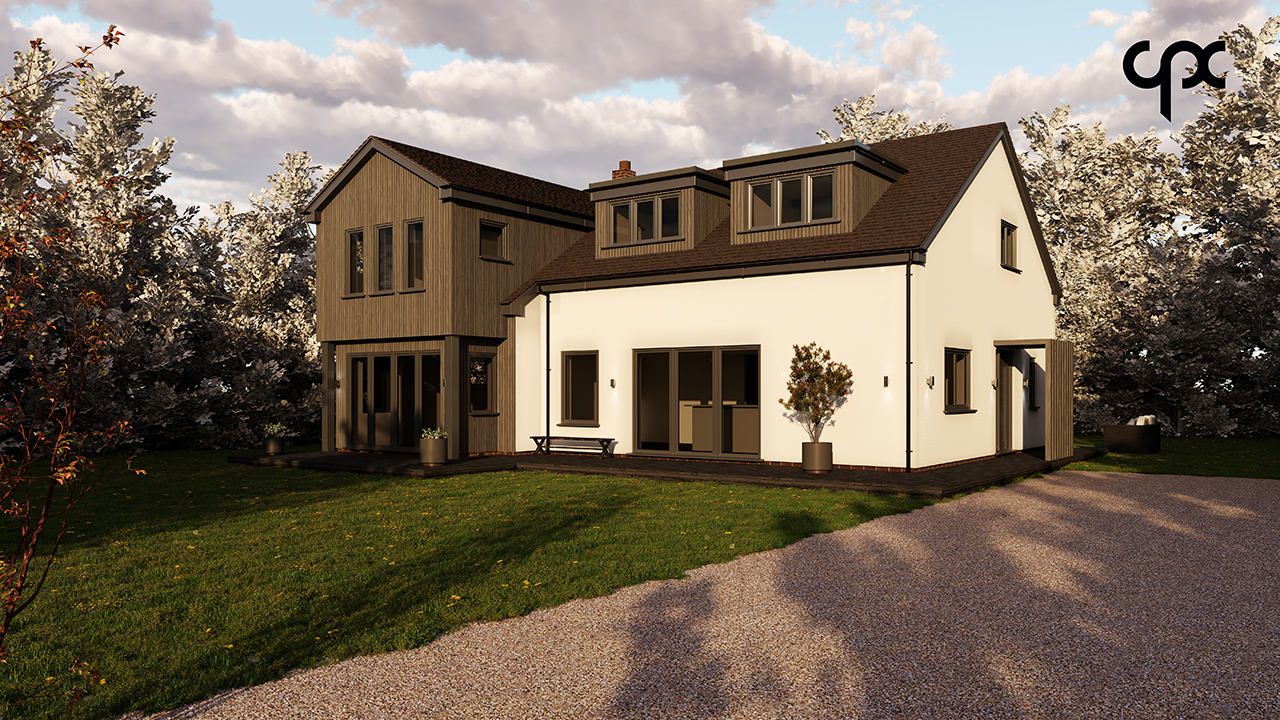
Reworking a 1970s Bungalow: A Thoughtful, Sustainable Refresh
Renovating a 1970s bungalow often comes with a familiar challenge: how do you modernise, improve performance, and adapt the house for contemporary living—without losing control of scale, character, or planning risk? At The Old Orchard in Great Missenden, the answer lay not in starting again, but in carefully refining what was already approved.
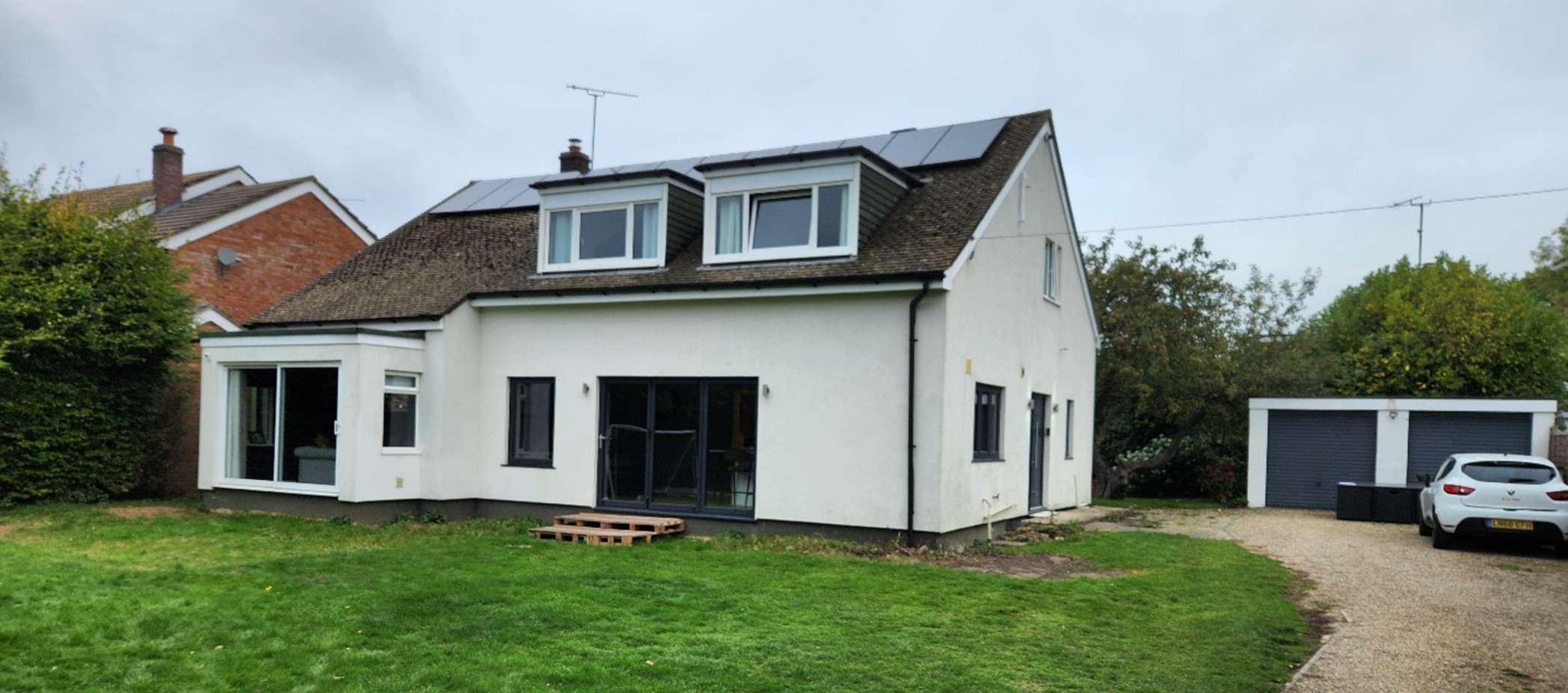
The property previously benefited from an extensive planning consent that included multiple extensions, roof alterations, and fenestration changes. While some of those works were partially implemented by the former owner—such as a new roof structure, upgraded windows, and refreshed external finishes—the permission itself had expired by the time the house changed hands. Rather than simply resubmitting the same scheme, the new owner took the opportunity to reassess it through the lens of sustainability, practicality, and long-term use.
Refining, Not Reinventing
The new proposals remain broadly consistent with the earlier consent, but with a series of subtle, considered changes. One of the most notable decisions was to simplify the roofscape. A previously approved rear dormer has been removed entirely, replaced with a single rooflight that provides daylight without unnecessary bulk. This small change significantly improves the visual clarity of the roof while reducing material use and construction complexity.
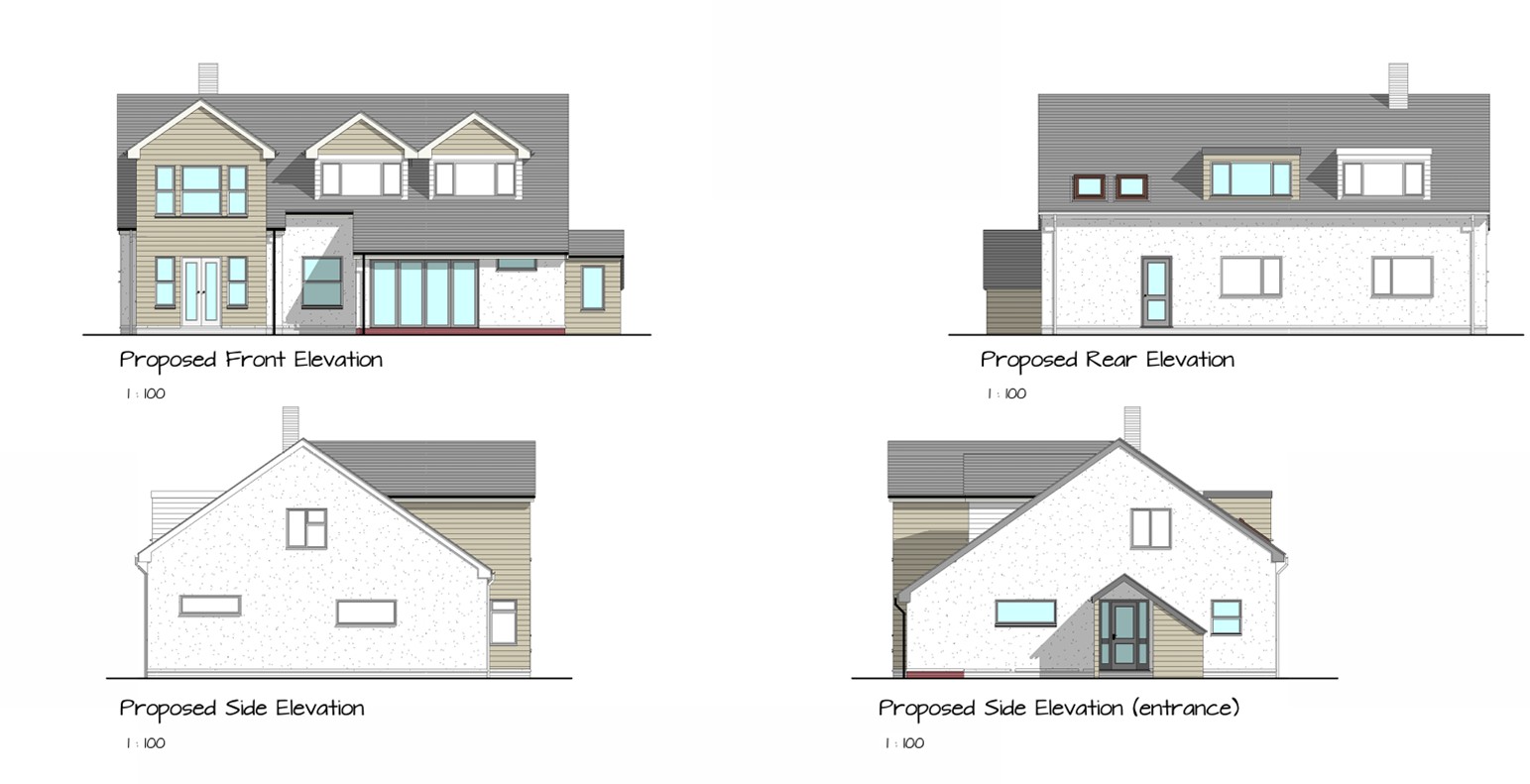
Equally, a side porch element was omitted, helping streamline the building form and avoid overcomplication. Importantly, the front dormers were retained—not just because they work visually, but because they support the existing solar panel installation. Retaining and working around renewable infrastructure is a recurring theme in sustainable retrofit, and here it played a key role in shaping the final design.
Making the Most of What’s Already There
One of the most effective sustainability moves on this project is largely invisible. By making modest adjustments to the front extension, the design allows the reuse of existing superstructure elements. This approach reduces demolition waste, cuts embodied carbon, and avoids unnecessary new materials—proving that sustainability doesn’t always mean adding more, but often doing less, more intelligently.
The external works follow the same logic. A modest 300mm raised deck wraps around the front and side of the bungalow, responding to the site’s topography and high damp-proof course. Rather than regrading the site extensively, the deck provides level access in a discreet, proportionate way. At the rear, where ground levels naturally rise, no raised decking is required at all.
Design That Respects Its Context
From the outset, the aim was to respect both the original bungalow and its wider setting. The revised scheme carefully balances improvement with restraint—maintaining established proportions, minimising impact on neighbouring properties, and ensuring the house continues to sit comfortably within the street scene.
This is particularly important in villages like Great Missenden, where character is shaped as much by consistency and rhythm as by architectural detail. Here, the proposal reads as a gentle evolution rather than a dramatic intervention—exactly the kind of approach that tends to age well, both aesthetically and in planning terms.
Access, Comfort, and Long-Term Living
Beyond appearance and policy, the scheme also focuses on how the house will actually be used. Level access via the new deck improves day-to-day usability and future-proofs the home, while internal upgrades allow for improved insulation and overall building performance. Paths and circulation routes are designed with accessibility in mind, aligning with Part M requirements where applicable, without feeling overly engineered.
A Measured Path Forward
This project is a good example of how revisiting an expired consent can lead to a better outcome—not by doing more, but by doing things with greater clarity and intent. By refining the design, reusing what already exists, and prioritising sustainability over excess, the revised proposals present a calm, well-reasoned response to a familiar housing type.
For owners of 1960s and 1970s bungalows, The Old Orchard shows that renovation doesn’t need to be radical to be transformative. Sometimes, the most successful projects are the ones that know exactly what to keep, what to let go, and how to move forward with confidence.
.